English

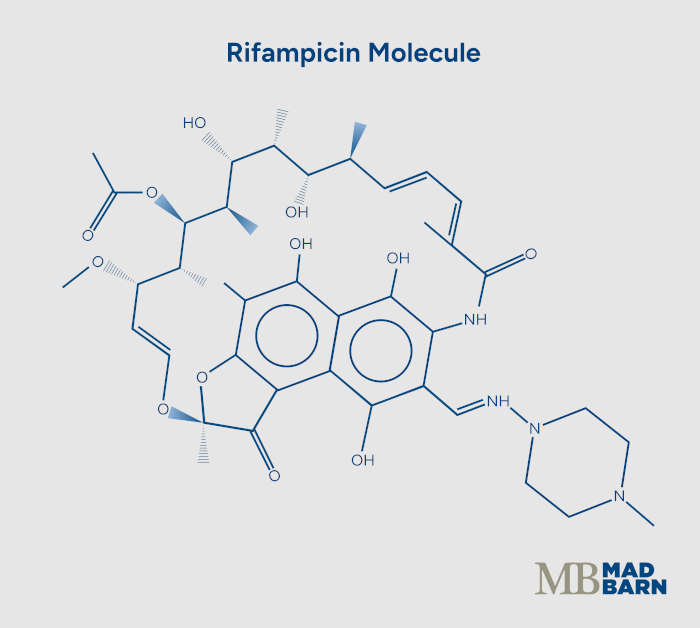
Rifampicin, also known as rifampin and sold under the trade name Rifadin®, is a prescription antibiotic used as part of combination treatment for Rhodococcus equi pneumonia (“rattles”) in foals. Because no rifampin product is labeled specifically for horses, it is prescribed extra-label under veterinary supervision and is usually paired with a macrolide antibiotic.
Rifampin reaches tissues and cells where R. equi bacteria can persist, including immune cells in the lungs. This makes it useful for infections that are difficult to treat with antibiotics that do not penetrate cells as effectively.
Like other antibiotics, rifampicin use carries some risk of side effects, including digestive upset and discoloration of urine, tears, saliva, or sweat. Careful diagnosis and targeted treatment are important for protecting individual horses and preserving antibiotic effectiveness.
Keep reading to learn how rifampin works, when veterinarians may prescribe it, potential side effects and drug interactions, and the rules governing its use in competition horses.
Rifampin for Horses
Rifampin, is an antibiotic used in horses primarily to help treat serious lung infections in foals caused by Rhodococcus equi bacteria. It is usually given by mouth and is commonly paired with a macrolide antibiotic, such as clarithromycin, azithromycin, or erythromycin.
Because no veterinary rifampin product is labeled for horses, its use is always extra-label (off-label) and must be directed by a veterinarian. [1][2]
Rifampin is a semi-synthetic antibiotic in the rifamycin family. In North America, it is usually called rifampin; in Europe and Australia, it is often called rifampicin. Both names refer to the same drug. [1][2]
While rifampin is usually considered in cases of rattles, veterinarians may also prescribe it for other bacterial infections when appropriate. Rifampin is not a first-choice drug for every bacterial infection, and it does not treat viral infections. [1][2]
Horse owners may notice red-orange discoloration of urine, tears, saliva, and sweat during treatment. This effect is usually harmless. However, careful antibiotic use is essential because widespread use of macrolide-rifampin combinations on breeding farms has been linked to multidrug-resistant R. equi. [1][4][5]
Treatment decisions must balance effective infection control with preserving future antibiotic options.
Available Forms
There are no veterinary-labeled rifampin products. Veterinarians prescribe human-labeled oral capsules or, less commonly, injectable formulations prepared for veterinary use under their direction. Brand availability varies by country. [1]
Common human-labeled rifampicin products include:
- Rifadin®
- Rimactane®
- Generic rifampin or rifampicin capsules
Capsules are typically available in 150 mg or 300 mg strengths. Exact products and compounding options depend on local regulations. Never give human medication to a horse unless a veterinarian has prescribed it for that use. [1]
What's your top priority with your horse's health?

What's your top priority with your horse's health?
Drug Class: Rifamycin Antibiotic
Rifamycins belong to a broader group of antibiotics called ansamycins. They are best known in human medicine for treating mycobacterial infections such as tuberculosis. Health organizations classify rifamycins as critically important antimicrobials for human medicine. [2][4][5]
This classification highlights the importance of thoughtful veterinary use, ideally guided by bacterial culture and susceptibility testing when possible.
Other antibiotics used in horses that may be considered for R. equi include macrolides such as clarithromycin, azithromycin, and erythromycin. In some cases, veterinarians may consider alternatives such as doxycycline. The choice depends on disease severity, culture results, the farm’s resistance history, and the foal’s overall health. [2][5]
Mechanism of Action
Rifampin acts against susceptible bacteria by binding to DNA-dependent RNA polymerase, an enzyme required for bacterial RNA synthesis.
Blocking this enzyme prevents susceptible bacteria from producing the proteins they need to survive and multiply. The drug targets the bacterial enzyme much more strongly than the corresponding enzyme in the horse. [1][2]
Key mechanisms of rifampin include: [1][2]
- Inhibits bacterial transcription: Rifampin interferes with RNA production, preventing susceptible bacteria from producing the proteins they need to grow and multiply.
- Time-dependent activity: Against R. equi, rifampin is time-dependent and bacteriostatic, so effectiveness depends on maintaining appropriate drug exposure over time.
- Intracellular and tissue penetration: Rifampin reaches abscess material and cells that harbor intracellular bacteria, including the cells where R. equi can persist.
Because a single gene mutation can make bacteria resistant to rifampin, the drug is traditionally combined with another effective antibiotic. [1][2][6]
After oral administration, rifampin is absorbed from the gastrointestinal tract. Food can delay absorption and slightly reduce peak concentrations. The drug is processed in the liver and can increase the activity of liver enzymes over several days, changing how the body handles rifampin itself and many other medications. [1][2]
Uses in Horses
All rifampin use in horses is extra-label, also called off-label. Extra-label use means a veterinarian prescribes a medication in a manner not specified on an approved product label, such as for a different species, condition, dosage, or administration route. [1][2]
This use is permitted under veterinary regulations when there is a valid veterinarian-client-patient relationship and sufficient evidence to support the treatment plan.
Rattles in Foals
Rifampin is primarily used with a macrolide to treat Rhodococcus equi pneumonia (rattles) in foals. R. equi is a common environmental bacterium that can cause severe pneumonia, usually in foals between one and five months of age. It can survive inside macrophages in the lungs, making treatment more difficult compared to many other types of infection. [2][5]
For decades, the standard treatment plan for rattles was a macrolide antibiotic plus rifampin, given continuously for several weeks to months. Survival improved markedly after combination therapy became common in the 1980s compared with older approaches. [1][2]
More recent research has identified important limitations and stewardship considerations with this approach, including: [2][3][4][5]
- Many foals with small, ultrasound-detected lung lesions improve without antibiotics
- Rifampin can reduce blood and lung concentrations of some oral macrolides
- Widespread screening and treatment of subclinical foals has been linked to increasing resistance to macrolides and rifampin
- Some randomized trials in mild-to-moderate cases have not shown a clear benefit from adding rifampin to macrolide therapy alone
Given this, in modern equine medicine veterinarians weigh disease severity, farm resistance patterns, culture results when available, and current stewardship guidance when deciding whether rifampin belongs in the treatment plan. [2][5]
Proliferative Enteropathy
Rifampin is also sometimes used, often with a macrolide, to treat proliferative enteropathy caused by Lawsonia intracellularis in foals. This use is also extra-label and must be directed by a veterinarian. [1]
Rifampin is not a routine “just in case” antibiotic for viral respiratory disease, simple wounds, or every foal with a small ultrasound lesion. Accurate diagnosis and targeted treatment help protect the individual foal and preserve antibiotic effectiveness. [2][5]
Antibiotic Spectrum
Rifampin has activity against selected susceptible bacteria, including intracellular organisms such as R. equi. It is not appropriate for every bacterial infection, and resistance patterns vary across regions and populations.
Culture and susceptibility testing can help determine whether rifampin is likely to be effective, particularly on farms with a history of resistant R. equi. [1][2][5]
Administration Routes
In horses, rifampin is almost always administered by mouth. Capsules may be mixed with feed or given according to the veterinarian’s instructions. Absorption is generally better on an empty stomach when practical, because food can delay absorption and slightly reduce peak drug concentrations. [1]
The medication can be challenging to administer consistently. The veterinarian’s directions should be followed closely, and owners can use appropriate oral medication techniques when needed.
Intravenous rifampin is not available as a standard commercial veterinary product for horses. Reports of intravenous use describe serious reactions, including central nervous system depression, sweating, hemolysis, and anorexia. Injectable rifampin is not a routine barn treatment and should only be used under direct veterinary supervision. [1]
If a dose is missed, contact the prescribing veterinarian for instructions rather than doubling the next dose.
Since rifampin use is off-label for horses, there is no specific dosage approved for equine use. The prescribing veterinarian determines the dosage based on the horse’s weight, age, and specifics of their condition.
Storage
Store rifampin capsules in a tightly closed, light-resistant container at room temperature, approximately 15 to 30 °C (59 to 86 °F), and out of reach of children and animals.
Do not use the medication after its expiry date. Follow any additional storage instructions from the veterinarian, pharmacist, or product label. [1]
Safety Warnings & Precautions
Rifampin should only be used to treat infections caused by susceptible bacteria and when the expected benefits outweigh the risk of resistance and drug interactions. The drug should not be used alone when combination therapy is indicated, nor should it be used as blanket treatment for every foal with minor ultrasound findings. [1][2][5]
Additional caution is warranted in horses with the following conditions or treatment histories: [1][2]
- Pre-existing liver disease or a history of drug-related liver injury
- Known medication allergies, particularly to rifamycins
- A history of serious antibiotic-associated diarrhea
- Concurrent use of medications that are cleared by the liver
Farms with known multidrug-resistant R. equi require individualized treatment plans based on culture and susceptibility testing whenever possible. Foals infected with resistant strains have higher odds of nonsurvival than foals infected with susceptible isolates. [4][5][6]
Monitoring
Monitoring during rifampin treatment may include: [1][2]
- Daily observation of appetite, manure, attitude, breathing, and temperature
- Repeat ultrasound, radiographs, or bloodwork, such as fibrinogen testing, to track response in R. equi cases
- Liver enzyme monitoring during longer treatment courses
- Culture and susceptibility testing if the infection does not improve or recurs
Tell the veterinarian about every medication and supplement the horse receives because rifampin can change how many drugs are absorbed and metabolized. [1][2]
Antibiotic Resistance
Rifampin resistance can emerge rapidly because a single mutation in the drug’s bacterial target may reduce susceptibility. This risk is one reason rifampin has traditionally been paired with another effective antibiotic rather than used alone. [1][2][6]
Excessive use of macrolide-rifampin combinations, particularly the treatment of foals with mild or subclinical lesions that may resolve without antibiotics, has contributed to multidrug-resistant R. equi. Resistant strains can spread between farms and are associated with poorer outcomes in affected foals. [2][4][5]
Contraindications
Contraindications are circumstances in which a drug should be avoided or used only with caution.
Rifampin should generally be avoided or used only with close veterinary oversight in horses with: [1]
- Known allergy or hypersensitivity to rifampin or other rifamycins
- Significant pre-existing liver disease, which may require changes to the treatment plan and closer monitoring
- An infection caused by rifampin-resistant bacteria, unless the veterinarian has a clear clinical justification
Safety in pregnant or lactating mares has not been fully established. High doses caused birth defects in some rodent studies, and rifampin enters milk in mammals. Use in breeding, pregnant, or nursing mares should occur only when a veterinarian determines that the potential benefits outweigh the risks. [1]
Rifampin should not be used alone for bacterial infections when combination therapy is the intended standard because resistance can develop rapidly. [1][6]
Side Effects
Side effects from rifampin alone appear uncommon in horses, but combination therapy and long treatment courses require careful monitoring. [1]
Possible side effects include: [1][2]
- Red-orange urine, tears, saliva, or sweat: This expected effect is usually harmless but can stain fabrics.
- Soft manure or mild diarrhea: More serious gastrointestinal disease, including enterocolitis, has been reported when rifampin is combined with erythromycin. Rare cases of severe diarrhea have occurred in treated foals and in mares whose foals were receiving treatment.
- Hyperthermia and acute respiratory distress: These effects have been reported in some foals receiving erythromycin combinations.
- Skin reactions or gastrointestinal upset: These effects are reported more often in people during long-term use, but owners should monitor horses for similar signs.
- Increased liver enzymes: Changes may appear on bloodwork, particularly during longer treatment courses.
- Allergic reactions: These reactions are considered rare.
Promptly contact the veterinarian if a treated foal or horse develops severe diarrhea, signs of colic, new or worsening fever, marked dullness, breathing difficulty, overheating, hives, facial swelling, yellow gums or eyes, or any sudden clinical decline.

Acute Toxicity (Overdose)
Signs of overdose may be severe manifestations of known side effects, including gastrointestinal upset and orange-red discoloration of body fluids. Very large overdoses may damage the liver. [1]
If overdose or accidental ingestion is suspected:
- Do not administer more medication or home remedies unless directed by a veterinarian
- Contact a veterinarian immediately, even if the horse appears normal
- Provide the medication container and treatment records to the veterinary team
Drug Interactions
Rifampin is a strong inducer of liver enzymes and drug transporters. Over several days of treatment, it can reduce the concentrations and effects of many concurrently administered drugs. [1]
Important interactions include: [1][2]
- Macrolide antibiotics: Rifampin can substantially reduce the oral absorption and blood or lung concentrations of some macrolides, including clarithromycin. The veterinarian accounts for this interaction when planning treatment and monitoring.
- Fluoroquinolone antibiotics: Laboratory antagonism has been reported, so concurrent use is generally avoided.
- Other medications metabolized by liver enzymes: Concentrations and effects may decline. Examples include barbiturates, diazepam, chloramphenicol, corticosteroids, ketoconazole, propranolol, quinidine, and warfarin when these drugs are used.
Rifampin can also interfere with some laboratory tests, including certain folate or vitamin B12 assays and older liver dye tests. [1]
Regulatory Status & Legal Considerations
Rifampin is approved and labeled for use in humans only. There are no veterinary-labeled rifampin products for horses, so all equine use is extra-label under a valid veterinarian-client-patient relationship and applicable prescribing regulations. [1][2]
Because rifamycins are critically important in human medicine, veterinary groups emphasize judicious, need-based use, avoiding unnecessary treatment of mildly affected foals and using culture results when practical.
The emergence and spread of multidrug-resistant R. equi linked to macrolide-rifampin use is a global health concern and an equine welfare issue. [2][4][5]
Status in Competition
Under FEI rules, substances may be categorized as Banned Substances, which are never permitted, or Controlled Medications, which have legitimate therapeutic uses but must not be present during competition. Substances not included on the FEI Equine Prohibited Substances List are generally not prohibited unless they are closely related to a listed substance. [7]
Rifampin is not listed on the FEI Equine Prohibited Substances List and does not appear on the FEI List of Detection Times. [7][8] Most antibiotics, including rifampin, are not prohibited by the FEI solely because they are antibiotics. However, horses should not be treated during an event without veterinary planning, and concurrently administered medications may have separate competition restrictions and withdrawal requirements.
National federations and racing authorities may apply different rules. Always check the current rules for the relevant governing body before treating a competition horse. A published detection time is only a laboratory guide; the treating veterinarian determines an appropriate withdrawal time, which may be longer. [7][8]
Frequently Asked Questions
Here are some frequently asked questions about rifampin use in horses:
Rifampin is used in horses mainly to help treat Rhodococcus equi pneumonia in foals. It is usually prescribed with a macrolide antibiotic, such as clarithromycin, azithromycin, or erythromycin. Veterinarians may also consider rifampin for certain other bacterial infections, including some cases of proliferative enteropathy caused by Lawsonia intracellularis. Rifampin does not treat viral infections and is not appropriate as a routine "just in case" antibiotic. [1][2]
Rifampin is not specifically approved or labeled for use in horses. Veterinarians prescribe human-labeled rifampin products to horses on an extra-label basis under a valid veterinarian-client-patient relationship. There are no veterinary-labeled rifampin products for horses, so the veterinarian must determine the appropriate product, partner antibiotic, administration schedule, and treatment duration. Horse owners should never give a horse leftover rifampin prescribed to a person or another animal. [1][2]
Rifampin works in horses by blocking a bacterial enzyme called DNA-dependent RNA polymerase. Without this enzyme, susceptible bacteria cannot produce the RNA and proteins they need to live and multiply. Rifampin penetrates tissues, cells, and abscess material well, making it useful against R. equi, which can survive inside macrophages in the lungs. Depending on the bacterium and drug concentration, rifampin may kill bacteria or prevent them from growing. [1][2]
Rifampin is usually combined with another antibiotic because bacteria can rapidly develop resistance when it is used alone. A single mutation in the drug's bacterial target may be enough to reduce susceptibility. Pairing rifampin with another effective antibiotic, traditionally a macrolide for R. equi, can improve antimicrobial coverage and help limit resistance. However, current research and stewardship guidance may affect whether rifampin is necessary in an individual case. [1][2][6]
Not every foal with lung lesions needs rifampin or another antibiotic. Many foals with small lesions found through ultrasound screening improve without antimicrobial treatment, especially when they do not have significant clinical signs. Unnecessary treatment can contribute to macrolide- and rifampin-resistant R. equi. A veterinarian should assess the foal's signs, lesion severity, test results, and farm history before deciding whether treatment is warranted. [2][4][5]
A veterinarian determines whether a foal needs rifampin by considering its clinical signs, examination findings, imaging results, and the likelihood of a susceptible bacterial infection. Fever, coughing, nasal discharge, increased breathing effort, poor appetite, and lung abscesses or consolidation may support treatment for R. equi. Culture and susceptibility testing can help guide antibiotic selection, particularly when a foal does not improve or a farm has a history of resistant infections. The presence of extrapulmonary complications may also influence the treatment plan and prognosis. [2][5]
Rifampin is usually given to horses by mouth using capsules prescribed by a veterinarian. Food can delay absorption and slightly reduce peak drug levels, so the veterinarian may provide specific instructions about timing in relation to feeding. Injectable rifampin is not a routine barn treatment and has been associated with serious reactions in horses. Owners should follow the prescribed product and schedule exactly rather than opening, mixing, substituting, or administering the medication differently without veterinary direction. [1]
Horses may take rifampin for many weeks when it is used to treat R. equi pneumonia. The necessary treatment period depends on the foal's clinical response, imaging findings, and other veterinary assessments rather than on a fixed timeline. A foal may appear better before the infection has resolved completely. Stopping rifampin early or changing the treatment schedule without veterinary direction can contribute to relapse and antimicrobial resistance. [1][2]
Side effects of rifampin in horses can include soft manure, diarrhea, digestive upset, allergic reactions, and changes in liver enzymes. When rifampin is combined with erythromycin, treated foals may also be at risk of overheating, acute breathing distress, and potentially severe intestinal disease. Serious diarrhea has occasionally been reported in mares whose foals are receiving an erythromycin-rifampin combination. Longer treatment courses require careful monitoring for adverse effects and drug interactions. [1][2]
Rifampin can turn a horse's urine, sweat, tears, saliva, and other body fluids orange-red because the medication has a strong natural pigment. This color change is expected and is usually harmless. The pigment may stain bedding, clothing, and other materials that contact the horse's fluids. A veterinarian should still be contacted if the discoloration occurs with yellow gums or eyes, marked dullness, poor appetite, or other signs that could indicate illness or liver problems. [1]
A veterinarian should be contacted promptly if a horse receiving rifampin develops severe diarrhea, colic signs, worsening fever, marked dullness, breathing difficulty, or overheating. Hives, facial swelling, collapse, or another sudden change may indicate a serious reaction requiring urgent care. Yellow discoloration of the gums or eyes can be a warning sign of liver involvement. Do not stop, replace, or add medication unless the veterinarian provides instructions, except when emergency veterinary guidance directs otherwise.
If a horse misses a dose of rifampin, contact the prescribing veterinarian for instructions. Do not double the next dose unless the veterinarian specifically tells you to do so. The appropriate response may depend on when the dose was missed, the prescribed schedule, and the other antibiotic being administered. Maintaining the veterinarian-directed schedule is important during a long course of antimicrobial treatment.
If a horse receives too much rifampin, contact a veterinarian or emergency veterinary clinic immediately, even if the horse still appears normal. An overdose may cause digestive upset, unusually intense orange-red discoloration of body fluids, or liver injury at very high exposures. Do not give home remedies or additional medications unless directed by a veterinarian. Severe diarrhea, colic, marked dullness, yellow gums, breathing difficulty, or collapse requires urgent attention. [1]
Drugs that interact with rifampin in horses include some macrolide antibiotics and many medications processed by liver enzymes. Rifampin can lower the blood or lung concentrations of certain oral macrolides, including clarithromycin, and may weaken the effects of drugs such as corticosteroids, diazepam, ketoconazole, and some other medications. Laboratory antagonism has also been reported between rifampin and fluoroquinolone antibiotics, so concurrent use is generally avoided. Tell the veterinarian about every medication and supplement the horse receives before treatment begins. [1][2]
A horse taking rifampin should be monitored for changes in appetite, manure, attitude, breathing, and body temperature. Veterinarians may use repeat ultrasound examinations, radiographs, or bloodwork to evaluate whether an R. equi infection is responding. Liver enzyme testing may be recommended during longer treatment courses. Culture and susceptibility testing may be needed if the infection fails to improve or returns after treatment. [1][2]
Rifampin-resistant Rhodococcus equi requires an individualized treatment plan based on culture and susceptibility results whenever possible. Resistance to rifampin may occur alongside macrolide resistance, limiting the antibiotics likely to work. Foals infected with multidrug-resistant strains have a higher risk of nonsurvival than foals infected with susceptible isolates. A veterinarian may consider alternative antibiotics according to the infection's severity, laboratory findings, farm resistance history, and the foal's overall condition. [4][5][6]
Alternatives to rifampin for Rhodococcus equi depend on disease severity, susceptibility results, and the foal's clinical condition. Some studies of mild-to-moderate disease have not demonstrated a clear advantage from adding rifampin to macrolide therapy, while selected infections may warrant alternatives such as doxycycline. Foals with small ultrasound-detected lesions may sometimes be monitored without antibiotics. A veterinarian should select the treatment strategy because no single alternative is appropriate for every foal or farm. [2][5]
The safety of rifampin in pregnant or nursing mares has not been fully established. High doses have caused birth defects in some rodent studies, and rifampin reaches milk in mammals. Its use in breeding, pregnant, or nursing mares should therefore be limited to situations in which a veterinarian determines that the expected benefits outweigh the potential risks. The mare's health, stage of pregnancy or lactation, and available treatment alternatives should all be considered. [1]
Horses with significant liver disease may need to avoid rifampin or receive it only with close veterinary supervision. Rifampin is processed by the liver and can increase liver enzyme measurements, particularly during prolonged treatment. A veterinarian may recommend bloodwork and closer clinical monitoring when liver function is a concern. Yellow gums or eyes, poor appetite, marked dullness, or other possible signs of liver dysfunction warrant prompt veterinary attention. [1][2]
Rifampin is not listed on the 2026 FEI Equine Prohibited Substances List and does not appear on the FEI List of Detection Times. However, other medications administered with it, including certain anti-inflammatory drugs or corticosteroids, may be Controlled Medications with separate withdrawal requirements. National federations and racing authorities may also apply different rules. Owners should check the current regulations for their discipline and have the treating veterinarian establish an appropriate withdrawal plan before competition. [7][8]
Summary
Rifampin is an extra-label antibiotic most commonly combined with a macrolide to treat Rhodococcus equi pneumonia in foals. Veterinary oversight is essential because of potential side effects, drug interactions, and antimicrobial resistance.
- Rifampin penetrates lung tissues and immune cells where intracellular R. equi bacteria can persist
- Treatment decisions should consider disease severity, culture results, susceptibility testing, and the farm's resistance history
- Possible effects include red-orange body fluids, gastrointestinal upset, increased liver enzymes, and complications associated with combination therapy
- Rifampin induces liver enzymes and can reduce the concentrations or effects of macrolides and many other medications
- Unnecessary or incomplete treatment can contribute to multidrug-resistant R. equi and poorer outcomes in affected foals
- Rifampin is not listed as an FEI prohibited substance, but competition rules should always be confirmed with the relevant governing body
References
- Budde. J. A. and McCluskey. D. M. Plumb's Veterinary Drug Handbook, 10th Edition. Educational Concepts, LLC, dba VetMedux. 2023.
- Baptiste. K. E. et al. Is Rifampin (Rifampicin) Essential for the Treatment of Rhodococcus equi Infections in Foals? A Critical Review of the Role of Rifampin. Journal of Veterinary Pharmacology and Therapeutics. 2025.
- Buckley. T. et al. Resistance Studies of Erythromycin and Rifampin for Rhodococcus equi over a 10-Year Period. Irish Veterinary Journal. 2007.
- Alvarez-Narvaez. S. et al. Spread of Multidrug-Resistant Rhodococcus equi, United States. Emerging Infectious Diseases. 2021.
- Higgins. C. and Huber. L. Rhodococcus equi: Challenges to Treat Infections and to Mitigate Antimicrobial Resistance. Journal of Equine Veterinary Science. 2023.
- Giguere. S. et al. Antimicrobial Resistance in Rhodococcus equi. Microbiology Spectrum. 2017.
- 2026 Equine Prohibited Substances List. Fédération Equestre Internationale. 2026.
- FEI List of Detection Times 2024. Fédération Equestre Internationale. 2024.