Analyze Diet

Why is My Horse Eating Bedding? Possible Causes & How to Fix

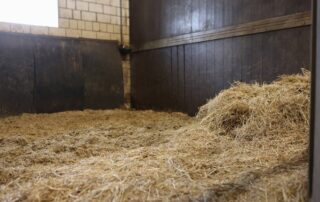
If your horse is eating bedding, it is important to understand why the behavior is occurring. While some horses may occasionally mouth or nibble fresh bedding out of curiosity, regularly eating straw, wood shavings, or other bedding materials is not considered normal feeding behavior. Bedding consumption is often related to inadequate forage, prolonged confinement, or other management factors. In some cases, it may also be associated with nutritional imbalances, dental disease, digestive disorders, or other underlying medical conditions.
Why is My Horse Eating Bedding? Possible Causes & How to Fix2026-08-23T13:52:59-04:00

Chemical Safety in Horse Barns: Risks, Storage & Handling Tips

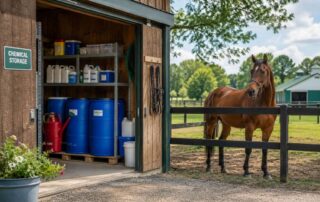
Chemical safety in barns is an important part of protecting the people who work around horses, as they may come into contact with disinfectants, pesticides, fuels, medications, and other potentially hazardous products. These substances are common in equine facilities, but routine use can make their risks easy to underestimate. Improper storage, poor ventilation, unmarked containers, and lack of protective equipment can increase the risk of health concerns in barn workers. Health issues related to chemicals can include skin irritation, respiratory symptoms, eye injuries, chemical burns, and neurological effects. Barn chemicals can also contribute to fires, spills, or dangerous reactions when incompatible products are stored or mixed incorrectly. Human safety is crucial for daily barn management, and horses are also at risk of accidental exposure when chemicals are not properly handled. Good chemical handling practices support a safer environment for everyone in the barn. Keep reading to learn about common barn chemicals, their associated risks, safe storage and labeling practices, personal protective equipment, ventilation, fire prevention, spill response, and regulatory considerations for equestrian facilities.

Chemical Safety in Horse Barns: Risks, Storage & Handling Tips2026-08-24T12:55:04-04:00

Interpreting Horse Facial Expressions: A Guide to Signs of Stress, Pain & Relaxation

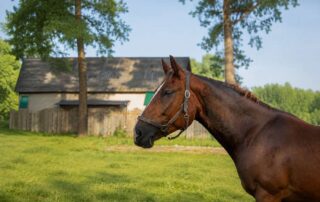
Horse facial expressions communicate emotional and physical states through subtle changes in the eyes, ears, nostrils, and muzzle. These cues can be easy to miss, but learning to recognize them can help you determine whether your horse is relaxed and curious or experiencing discomfort, fear, or stress. Facial cues are closely linked to equine welfare and may indicate that something is not right before more obvious behavioral signs appear. Paying attention to changes in your horse's expression can help you respond appropriately and support their comfort and well-being. Accurate interpretation requires considering multiple facial features alongside the horse's body language and surrounding environment. Knowing your horse's normal expression also makes it easier to recognize meaningful changes. Keep reading to learn what common horse facial expressions may mean, how researchers assess facial signs of pain, and how to interpret subtle cues in context.

Interpreting Horse Facial Expressions: A Guide to Signs of Stress, Pain & Relaxation2026-08-26T15:31:17-04:00

Acepromazine for Horses: Uses, Side Effects & Status in Competition

Acepromazine is one of the most commonly used sedatives in equine veterinary medicine. It is valued for its ability to reduce anxiety and make horses easier and safer to handle during veterinary procedures, farrier care, transportation, and other potentially stressful situations. Acepromazine primarily affects dopamine receptors in the brain, producing a calming effect without the profound sedation or pain-relieving effects associated with some other sedative and anesthetic drugs.

Acepromazine for Horses: Uses, Side Effects & Status in Competition2026-08-23T13:50:06-04:00

Horse Sounds & Vocalizations: What Whinnies, Nickers, Snorts & Other Noises Mean

Horse vocalizations and sounds can offer valuable clues about a horse's emotions, social interactions, and physical well-being. Learning to recognize these sounds can help owners better understand what their horses are communicating. Some sounds, such as whinnies, nickers, and squeals, primarily serve social purposes. Others, including snorts, groans, coughs, and abnormal breathing noises, must be interpreted alongside the horse's body language and surrounding circumstances.

Horse Sounds & Vocalizations: What Whinnies, Nickers, Snorts & Other Noises Mean2026-08-23T15:31:51-04:00

How to Teach Lead Changes: Training Tips & Exercises

Lead changes occur whenever a horse switches from one canter lead to the other. Horses perform them naturally at liberty when changing direction, adjusting their balance, or responding to the terrain and movement around them. Under saddle, riders use lead changes across many disciplines, including dressage, hunters, equitation, show jumping, eventing, and Western performance. Depending on the horse's training and the demands of the activity, the change may be performed through another gait or completed as a flying change without interrupting the canter. Training makes these natural movements reliable and responsive to the rider's aids. A well-prepared horse can change leads at the appropriate moment while maintaining balance, rhythm, straightness, and forward movement. Correct lead changes help the horse follow a new direction, stay organized through turns, and prepare for the next movement or obstacle. This article explains the biomechanics of lead changes, the flatwork foundation, simple and flying changes, common training exercises, and expectations across the jumping disciplines.

How to Teach Lead Changes: Training Tips & Exercises2026-08-23T13:49:21-04:00

Standardbred Pacers vs. Trotters: Differences in Gait, Speed & Training

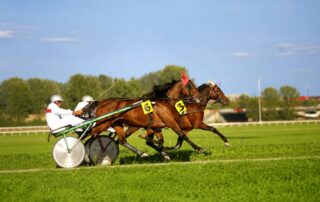
Standardbred pacers and trotters compete in the same harness racing sport, but their gaits shape how they move, train, race, and transition into careers after the track. Trotters move in diagonal pairs, while pacers move laterally with both legs on one side reaching forward together. These two-beat gaits may look similar at speed, but they reflect important differences in movement mechanics, equipment use, racing divisions, and performance demands. The differences between pacers and trotters are influenced by genetics, breeding, training, and harness racing tradition. These differences can also affect injury patterns, retraining needs, and what owners should expect from retired Standardbreds entering new riding careers. Keep reading to learn how pacing and trotting differ, why some Standardbreds are more likely to perform one gait than the other, and what these differences mean for racing, management, and life beyond the track.

Standardbred Pacers vs. Trotters: Differences in Gait, Speed & Training2026-08-24T12:40:13-04:00

Dutch Tuigpaard Horse Breed Guide: Characteristics, Health & Nutrition

The Dutch Tuigpaard is a Dutch harness horse breed known for expressive movement, an elevated trot, and proud carriage in the show ring. Descended from versatile Dutch carriage and farm horses, the modern Tuigpaard is purpose-bred to stand out in harness with a lifted forehand, active hind end, and powerful trot. Also known as the Dutch Harness Horse, the breed developed within the Dutch warmblood tradition and is recognized by the Royal Warmblood Studbook of the Netherlands (KWPN) as a distinct harness horse breeding direction. Selection emphasizes animation, uphill balance, cooperative temperament, and suitability for competitive driving.

Dutch Tuigpaard Horse Breed Guide: Characteristics, Health & Nutrition2026-08-23T13:48:09-04:00

Developing Rhythm, Balance & Straightness in Horses: Exercises & Tips

Rhythm, balance, and straightness are key training principles that influence how a horse moves, carries their body, and responds to the rider's aids. Together, they help the horse stay organized, coordinated, and easier to guide under saddle. Although these concepts are often associated with dressage, they are important for every riding discipline. A horse that lacks rhythm, balance, or straightness may rush, lean on the bit, fall onto the forehand, lose the canter, drift through turns, or feel heavier on one rein. Over time, these issues can affect rideability, performance, muscle development, and soundness. Developing rhythm, balance, and straightness is a gradual process that depends on clear communication, appropriate conditioning, and exercises matched to the horse's current level of strength and coordination. As these qualities improve, the horse can move with greater stability, use their body more evenly, and become more responsive to the rider's aids. Continue reading to learn what rhythm, balance, and straightness mean, how they affect your horse's way of going, and practical exercises to help improve correct movement.

Developing Rhythm, Balance & Straightness in Horses: Exercises & Tips2026-08-23T13:46:44-04:00

Training Horses to Ground Tie: Training Tips, Safety & Troubleshooting

Ground tying for horses is one of the most valuable basic handling skills equestrians can teach their horses. Many owners only realize how useful it is when they need their horse to stand quietly without being held, tied, or cross-tied. A reliable ground tie can make everyday handling safer and more convenient, from adjusting tack on the trail to preparing for a veterinary exam or farrier visit. It also reflects clear communication between horse and handler, since the horse learns to stay in place because it understands the cue, not because equipment prevents it from leaving.

Training Horses to Ground Tie: Training Tips, Safety & Troubleshooting2026-08-24T12:39:50-04:00

Local Anesthetics for Horses: Uses, Side Effects & Status in Competition

Local anesthetics are among the most commonly used medications in equine veterinary medicine. These drugs temporarily block nerve conduction, preventing pain signals from traveling from a specific area of the body to the brain. By providing targeted pain relief without causing unconsciousness, local anesthetics allow veterinarians to perform a wide range of diagnostic and therapeutic procedures safely and effectively.

Local Anesthetics for Horses: Uses, Side Effects & Status in Competition2026-08-23T13:44:52-04:00

What Determines Athletic Performance in Horses? Genetics, Training & Nutrition

Athletic performance in horses refers to a horse's physical capacity to perform work, whether that means accelerating down the final stretch of a racetrack, clearing a technical jumping combination, or maintaining collection through a dressage test. Performance depends on how well the cardiovascular, respiratory, muscular, skeletal, and neurological systems work together under load. A horse with strong athletic capacity can generate power, sustain effort, recover efficiently, and repeat that effort with a lower risk of fatigue-related setbacks.

What Determines Athletic Performance in Horses? Genetics, Training & Nutrition2026-08-05T15:39:23-04:00

Penicillin G for Horses: Uses, Side Effects & Status in Competition

Penicillin G, also called benzylpenicillin, for horses is a prescription antibiotic used under veterinary direction for selected bacterial infections. It has long been used in equine practice, but its value depends on choosing the right formulation, route, and treatment plan for the individual horse. Penicillin G can be highly useful, but it must be chosen carefully. It does not work against viruses, fungi, mycoplasma, parasites, or many gram-negative bacteria. It also does not work against bacteria that produce certain enzymes that inactivate penicillin. Culture and susceptibility testing are important whenever possible. Safe use requires attention to possible side effects, injection-related reactions, antibiotic resistance, and competition rules, especially when procaine penicillin G is used. Veterinary oversight helps confirm whether Penicillin G is appropriate and ensures treatment supports the horse's health without creating unnecessary risk.

Penicillin G for Horses: Uses, Side Effects & Status in Competition2026-08-05T15:33:22-04:00

Gentamicin for Horses: Uses, Side Effects & Status in Competition

Gentamicin for horses is a prescription antibiotic used to help manage certain bacterial infections, particularly those involving gram-negative bacteria. Gentamicin is an important treatment option in cases of serious equine infections, and must be used carefully. The correct route, dose, duration, and monitoring plan depend on the horse's age, hydration status, kidney function, infection site, culture results, and other medications being used. Horse owners should understand that gentamicin is not appropriate for every infection and is not effective against viruses, fungi, or many anaerobic bacteria. Improper use can increase the risk of treatment failure, kidney injury, adverse drug interactions, and antimicrobial resistance.

Gentamicin for Horses: Uses, Side Effects & Status in Competition2026-08-05T15:32:25-04:00

Meloxicam for Horses: Uses, Side Effects & Status in Competition

Meloxicam is a non-steroidal anti-inflammatory drug (NSAID) used under veterinary direction to help manage pain and inflammation in horses. Horse owners may encounter meloxicam as part of a treatment plan for musculoskeletal discomfort, post-surgical pain, or other situations where controlling inflammation can support comfort and recovery. Like other NSAIDs, meloxicam can help reduce pain-related signs, but it is not risk-free. Potential concerns include effects on the digestive tract, kidneys, and blood clotting, particularly in horses that are dehydrated, medically fragile, or receiving other medications.

Meloxicam for Horses: Uses, Side Effects & Status in Competition2026-08-05T15:31:26-04:00

How to Ride Flying Lead Changes in Dressage: Training Tempi Changes

Learning how to ride flying lead changes is one of the most important milestones in a dressage rider's journey up the levels. Flying lead changes are an advanced dressage movement that is beautiful to watch and exhilarating to ride. In a single stride, the horse switches from one canter lead to the other, mid-air, without breaking rhythm or taking a step of walk or trot. Loose in the field, horses naturally adjust their balance and change leads freely at the canter whenever they shift direction. Under saddle, producing that same ease takes preparation, precise timing, and a strong foundation.

How to Ride Flying Lead Changes in Dressage: Training Tempi Changes2026-08-23T13:43:53-04:00

Getting Back in the Saddle After a Fall or Refusal: Rebuilding Rider Confidence

Rider confidence after a fall or setback can feel hard to regain, even when the rider is physically ready to get back in the saddle. A stop at a fence, a difficult ride, a painful fall, or a disappointing competition round can change how a rider feels before they mount, approach a jump, or enter the ring. The horse may be capable, the rider may understand what to do, but fear and hesitation can still interfere with timing, balance, and communication. Rebuilding confidence is not simply a matter of "getting over it." Rider anxiety has real psychological and physical effects, and horses can respond to the tension, uncertainty, and changes in the aids that come with it. A thoughtful return to riding means addressing both the rider's nervous system and the training environment that supports progress.

Getting Back in the Saddle After a Fall or Refusal: Rebuilding Rider Confidence2026-08-05T15:30:11-04:00

Foal Not Nursing: Causes, Emergency Signs & Treatment

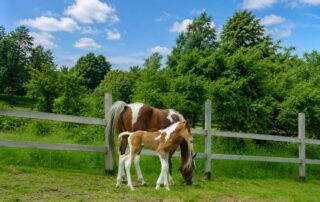
A foal not nursing is a serious concern for any owner or caretaker involved in horse breeding. Newborn foals rely on frequent milk intake for hydration, energy, immune support, and early growth. During the first weeks of life, healthy foals nurse many times each hour, so a foal that fails to latch, stops nursing, or nurses poorly requires close attention. Nursing problems can originate with the foal, the mare, or both. Because newborn foals can decline quickly, changes in nursing behavior warrant prompt veterinary attention. Early evaluation helps identify the cause, protect the foal from dehydration or failure of passive transfer, and guide safe feeding support when needed.

Foal Not Nursing: Causes, Emergency Signs & Treatment2026-08-23T13:43:01-04:00

Karabair Horse Breed Guide: Characteristics, Health & Nutrition

The Karabair is a rare horse breed from Central Asia. Developed in Uzbekistan, these horses were shaped by a demanding environment where breeders needed horses that could travel, work, and stay sound across the region's dry mountains and deserts. That practical background still defines the breed today. Karabair horses are valued for their versatility, athleticism, and hardiness. They are not as widely known as some breeds, but they have many qualities modern horse owners admire. Outside Central Asia, English-language registry information is limited, which can make the breed harder to research. Even so, published sources from Uzbekistan and regional universities describe a versatile native horse with long-standing cultural and economic importance. This guide explores the history, characteristics, health concerns, and nutrition needs of Karabair horses. Keep reading to learn how to support these rare horses at home and in work.

Karabair Horse Breed Guide: Characteristics, Health & Nutrition2026-08-04T16:22:17-04:00

Hungarian Coldblood Horse Breed Guide: Characteristics, Health & Nutrition

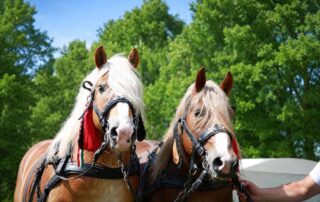
The Hungarian Coldblood is a rare draft horse from western Hungary, developed for agricultural work, hauling, and driving. Built for strength and reliability, this breed reflects the practical qualities long valued in European coldblood horses. Hungarian Coldbloods are generally calm, substantial horses with the bone, muscling, and steady temperament suited to work in harness and other low-intensity roles. Their broad build reflects generations of selection for pulling power, soundness, and dependable farm work rather than speed or refinement. Today, the breed is less common than it once was, but they remain part of Hungary's working horse heritage. For owners and caretakers, understanding the Hungarian Coldblood means considering both its history and the management needs that come with maintaining a large, easy-keeping draft horse. Keep reading to learn more about the Hungarian Coldblood, including how the breed developed, what makes these horses distinct, and how thoughtful care and feeding can help support their long-term health.

Hungarian Coldblood Horse Breed Guide: Characteristics, Health & Nutrition2026-08-03T20:58:35-04:00

How to Ride Extended Trot in Dressage: Training Tips for Extension

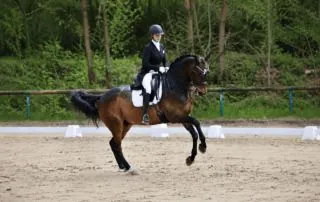
Extended trot is one of the most expressive and demanding movements in dressage, showing the horse's ability to lengthen the stride and frame while staying rhythmic, balanced, and in self-carriage. When ridden well, the horse appears to float forward with long, ground-covering steps and an unhurried moment of suspension. The movement may look effortless, but correct extension depends on strength, suppleness, impulsion, and clear communication between horse and rider. Extended trot first appears in competition at USDF Third Level and continues through the FEI levels, where it becomes an increasingly important test of collection, throughness, and training quality. Asking for extension before the horse is physically and mentally prepared can lead to rushing, hollowing, or loss of balance.

How to Ride Extended Trot in Dressage: Training Tips for Extension2026-08-03T20:54:26-04:00

Do Horses Grieve After Losing a Companion? Signs & How to Help

Horses can show signs of grief or distress after losing a close companion, especially when the loss disrupts a familiar social bond. Whether animals grieve has become an important topic in animal behavior and welfare research, as scientists have documented behavioral changes after social loss in several highly social species. Owners often notice similar behavioral changes in their own horses following a loss. After a pasture companion dies or permanently leaves, some horses become quieter, call repeatedly, search familiar areas, or behave differently than usual. These responses naturally lead many owners to wonder how horses experience loss. Researchers cannot determine exactly what a horse feels emotionally or whether horses understand death in the same way humans do. However, strong evidence shows that horses form close social bonds and are affected when those relationships are disrupted. Changes after the death or departure of a companion may reflect a loss of social support, altered herd dynamics, or separation-related distress. Understanding why companion loss can affect some horses so profoundly begins with how horses naturally form and maintain social relationships.

Do Horses Grieve After Losing a Companion? Signs & How to Help2026-08-26T15:30:49-04:00

Winter Diarrhea in Horses: Causes, Symptoms & Treatment

Winter diarrhea in horses is a common concern, as seasonal changes in feeding, management, and daily routines can affect a horse's digestive health during the colder months. Although diarrhea can occur at any time of year, it may become more noticeable in winter as horses spend more time stabled, consume more conserved forage, and experience changes in water intake or turnout. Diarrhea is a symptom of an underlying problem, not a diagnosis. Causes can range from relatively minor dietary disturbances to infectious diseases, parasites, medications, toxins, and disorders affecting the gastrointestinal tract. Some horses may also develop free fecal water syndrome during winter, a separate condition that can resemble diarrhea but has different characteristics and management considerations. Identifying the cause is important because treatment depends on why the diarrhea has developed. While some cases improve with appropriate management and supportive care, persistent, severe, or sudden diarrhea warrants veterinary investigation to help prevent dehydration, identify infectious disease, and address potentially serious intestinal disorders. Keep reading to learn what winter diarrhea is, how it differs from free fecal water syndrome, common causes, and when to seek veterinary care.

Winter Diarrhea in Horses: Causes, Symptoms & Treatment2026-08-03T15:57:00-04:00

Grinding Teeth (Bruxism) in Horses: Causes, Signs & Treatment

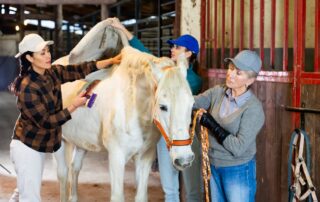
Teeth grinding in horses, also known as bruxism, is an abnormal behavior that often indicates pain, discomfort, or an underlying medical condition. Although the sound may be most noticeable while a horse is eating or resting, persistent grinding is a symptom rather than a disease itself. Teeth grinding may be one of the first visible signs that a horse has an underlying health problem. Bruxism has been associated with dental disorders, gastric ulcers, colic, musculoskeletal pain, neurologic disease, and other painful conditions. Because many different disorders can produce the same behavior, identifying the cause is essential before treatment can begin. Understanding when teeth grinding occurs, what other symptoms are present, and which conditions are most commonly involved can help horse owners know when veterinary evaluation is needed. Keep reading to learn what teeth grinding may mean in horses, how veterinarians diagnose the underlying cause, and what steps can help support your horse's comfort and welfare.
Grinding Teeth (Bruxism) in Horses: Causes, Signs & Treatment2026-08-26T15:30:05-04:00

How to Desensitize a Spooky Horse: A Step-by-Step Guide

Desensitizing a horse can help reduce spooky behavior and teach them to stay calmer around unfamiliar sights, sounds, and objects. Horses, as flight animals, are naturally alert to potential threats and are startled by perfectly ordinary things. For owners and riders, this reactivity can make everyday activities more stressful and may affect safety, confidence, and training progress. To desensitize horses effectively, it helps to understand what happens in the brain when a fear response is triggered and how learning processes can reshape that response over time. The goal is not to force a horse to tolerate stress, but to help them build confidence through clear, gradual, and humane training. Keep reading to explore five science-based desensitization methods that can help your horse become more confident in unfamiliar or potentially frightening situations. Learn how each approach works and how to choose the method best suited to your horse's temperament, experience, and training goals.

How to Desensitize a Spooky Horse: A Step-by-Step Guide2026-08-03T15:51:45-04:00

Garrano Horse Breed Profile: Characteristics, Health & Nutrition

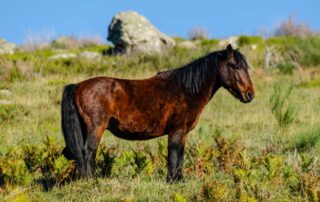
The Garrano horse is a rare native breed from northern Portugal known for its hardiness, sure-footedness, and close connection to the mountain landscapes where it developed. Compact and resilient, the Garrano was shaped by rough terrain, sparse forage, and extensive management. These conditions helped produce a practical small horse with strong survival traits, efficient metabolism, and the agility needed for work and travel in hilly regions. Today, Garranos are valued for trail riding, trekking, conservation grazing, and preserving Portugal's equine heritage. Like many hardy native breeds, they often do well on simple forage-based diets, but domestic management requires attention to body condition, hoof care, dental health, parasite control, and metabolic risk.

Garrano Horse Breed Profile: Characteristics, Health & Nutrition2026-08-03T15:51:16-04:00

Castor Bean (Ricin) Toxicosis in Horses: Signs, Treatment & Prevention

Castor bean (Ricinus communis) is a highly toxic flowering plant that can pose a serious poisoning risk to horses, especially when seeds are chewed or crushed.The plant is widely distributed throughout tropical, subtropical, and warm temperate regions worldwide. Castor bean is often grown as an ornamental plant because of its large, striking leaves and fast growth. It can also spread into disturbed areas, including parts of the United States and Canada. Although the plant is used to produce castor oil, its seeds and leftover plant material contain powerful toxins that can cause severe digestive upset and serious illness throughout the body in horses. Castor bean poisoning is relatively uncommon in horses, but exposure can lead to rapid deterioration and may be fatal. Understanding how to identify castor bean, recognize potential exposure risks, and prevent access to the plant is essential for protecting horses in pastures, paddocks, gardens, and feed storage areas.

Castor Bean (Ricin) Toxicosis in Horses: Signs, Treatment & Prevention2026-08-23T13:39:49-04:00

Studying Equine Science: College & University Programs, Degrees and Careers

Equine science and equine studies programs combine horse management, animal science, and hands-on learning to prepare students for careers in the horse industry. Offered by many colleges and universities, these programs help students build practical horsemanship skills alongside a stronger understanding of equine health, nutrition, reproduction, behavior, and performance. Graduates may pursue careers in areas such as horse training, breeding, stable management, veterinary medicine, equine nutrition, rehabilitation, racing, and equine business. Depending on the institution, students may complete a dedicated equine degree or choose an equine specialization within a broader animal science, agriculture, or business program.

Studying Equine Science: College & University Programs, Degrees and Careers2026-08-03T15:44:18-04:00

Horse Teeth Anatomy: Types, Function & Equine Dental Care

Horse teeth are specialized structures adapted for continuous grazing and the breakdown of fibrous forage. Unlike human teeth, equine teeth have long reserve crowns that extend deep into the jaw and gradually erupt throughout much of the horse’s life to replace worn chewing surfaces. The horse’s mouth contains several types of teeth, including incisors, canines, wolf teeth in some horses, premolars, and molars. These teeth are arranged to cut forage at the front of the mouth and grind it along the cheek teeth before swallowing. Each tooth is made from enamel, dentine, cementum, and living pulp tissue, with these materials forming the ridged surfaces that help horses process coarse plant material. Because horse teeth are constantly erupting, wearing, and changing with age, their anatomy is closely linked to chewing function, dental health, and long-term comfort. Understanding the structure, types, development, and function of horse teeth provides an important foundation for recognizing how equine dental anatomy supports nutrition, comfort, and well being throughout life.

Horse Teeth Anatomy: Types, Function & Equine Dental Care2026-08-03T15:41:22-04:00

Posting Trot for Beginner Riders: How to Ride in Rhythm with Your Horse

Posting trot is a foundational riding technique that helps riders move in rhythm with the horse's two-beat trot. By rising and sitting with the horse's diagonal movement, the rider can reduce the bounce of the trot and create a smoother, more comfortable ride. Although it is often introduced early in a rider's education, posting trot is more than a beginner skill. When performed correctly, it can help reduce jarring forces on the horse's back, support a steady rhythm, and improve the rider's balance, coordination, and feel through the seat. Riders learning to ride, refining their equitation, or returning to the saddle after time away can all benefit from developing an effective posting trot. Understanding how the movement works also helps riders avoid common mistakes, such as rising too high, bracing through the legs, or relying on the reins for support. Keep reading to learn what posting trot is, how it works, how to teach and learn it, common mistakes to avoid, and exercises that can improve skill and confidence in the saddle.

Posting Trot for Beginner Riders: How to Ride in Rhythm with Your Horse2026-08-03T15:39:56-04:00